ABC-03
Ground
Biochar amendments for compacted and contaminated urban soils.
What it does
ABC-03 Ground is a soil-first line for urban restoration work. It moves water, air, and roots through soils that have been compacted, capped, or chemically stressed — without the disturbance of a full excavate-and-replace.
What it does
- Reduces bulk density in compacted urban soils
- Increases plant-available water and root penetration
- Buffers pH and binds legacy urban contaminants
Where it fits
- Street-tree pit rehabilitation
- Park and campus turf restoration
- Post-construction topsoil remediation
- Landscape-scale urban greening
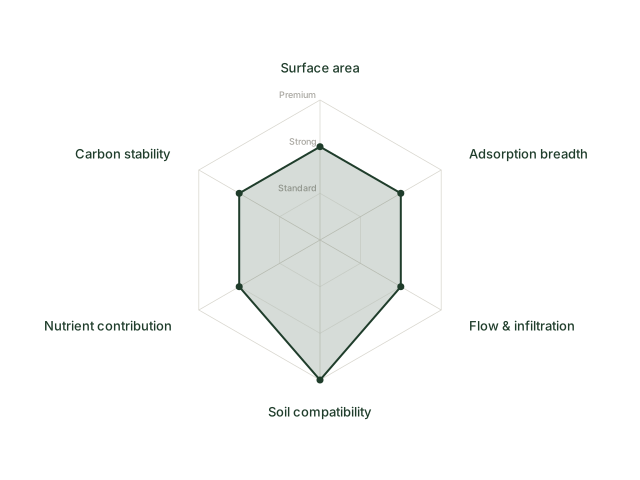
Source biochars
Where it comes from.
OR-1900
Douglas fir residuals
Pyrolysis: 1900 °F
TN-Hardwood
Appalachian hardwood
Pyrolysis: 1600 °F
ME-Wood
Northern softwood residuals
Pyrolysis: 1500 °F
PA-Hardwood
Northeast hardwood
Pyrolysis: 1650 °F
Producer identities are shared on the project record under NDA.
Typical specifications
What sits on every lot spec.
| Feedstock | Per source code (OR-1900, ME-Wood, TN-Hardwood, PA-Hardwood) |
|---|---|
| Pyrolysis | 1,300–1,900 °F depending on source |
| Organic carbon | ≥ 60% (lot-level number disclosed on spec sheet) |
| H:C ratio | ≤ 0.7 (meets IBI Class A criteria) |
| Surface area | Ranges disclosed per lot; GAC-class for ABC-02 |
| Bulk density | 12–28 lb/ft³ depending on format |
| pH | 7.5–10.0 depending on feedstock |
| Heavy metals | Full panel on every lot |
Lot-level numbers ship with the spec sheet under NDA.